GASTRONAUT™
The platform that closes the
600-day deep-space nutrition gap
Crew Health Has Hit
a Physiological Ceiling.
Gastronaut Raises It.
Today's astronauts perform extraordinary work on rations engineered for a different era. The data below shows where the gap is. The next section shows how we close it.
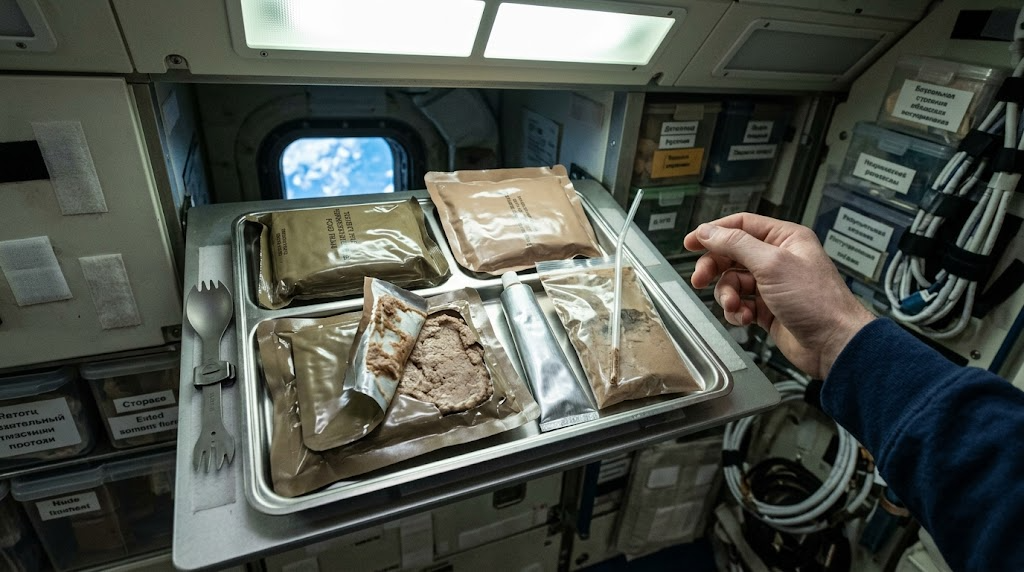
The Mars math, rewritten.
Without intervention, crews lose body mass through every phase of a long-duration mission. The decline plateaus, then erodes again as physiological reserves run down.
Gastronaut closes the gap with fresh, peer-reviewed phytonutrient profiles delivered daily. The green band shows the projected trajectory with ORCA onboard.
Body Mass Trajectory Over Mission Duration
Illustrative schematic only; curves are not measured or modeled data.
The platform that closes
crew health at the source.
Gastronaut is not a garden. It is a combined life-support subsystem delivering nutrition, atmospheric processing, gut-brain protection, and vision support in a single standalone enclosure.
One Platform. Four Systems.
ORCA integrates CRISPR-edited microgreen production, atmospheric processing, behavioral nutrition delivery, and vision-protective phytochemistry into a single standalone enclosure. Continuous output. Closed-loop water. Edge automation.
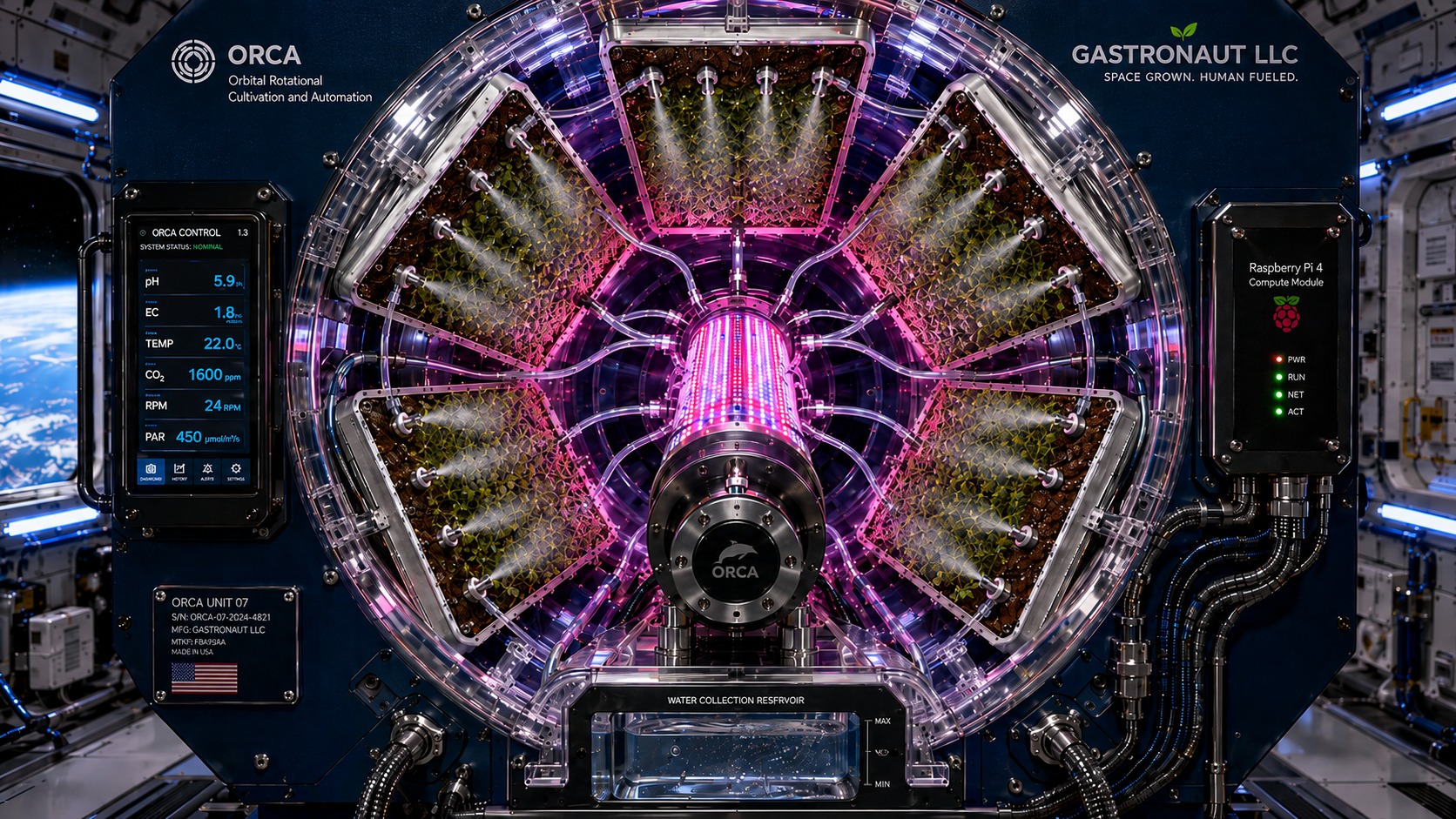
Four Functions. All Compounding.
Every ORCA platform delivers four overlapping mission-critical functions. They compound, which is why the unit economics close where competitors stall at single-function payloads.
Cellular Defense (Nrf2)
CRISPR edits produce 2.3 to 3.1 times more protective enzymes. The body's master switch for cellular self-repair, activated by sulforaphane from broccoli microgreens.
Atmospheric Processing
120 to 240 mmol of CO2 scrubbed per day. Roughly one quarter of an astronaut's daily atmospheric load. Gastronaut moves from consumable to ECLSS subsystem.
Brain Protection (Gut Health)
Prebiotic-rich microgreens maintain gut microbiome integrity via the gut-brain axis. LunAres analog: +1.78 SD behavioral improvement across 30 studies, n = 2,071.
Vision Protection (SANS)
75% of long-duration astronauts develop optic disc edema. B-vitamin delivery plus Nrf2-mediated retinal protection. Validated by JAMA Ophthalmology, 2024.
Full Offset. Zero Decline.
Combined analysis of 28 independent studies. The model explains 71% of variation in crew wellbeing. Every contributing factor is statistically significant at p < 0.01.

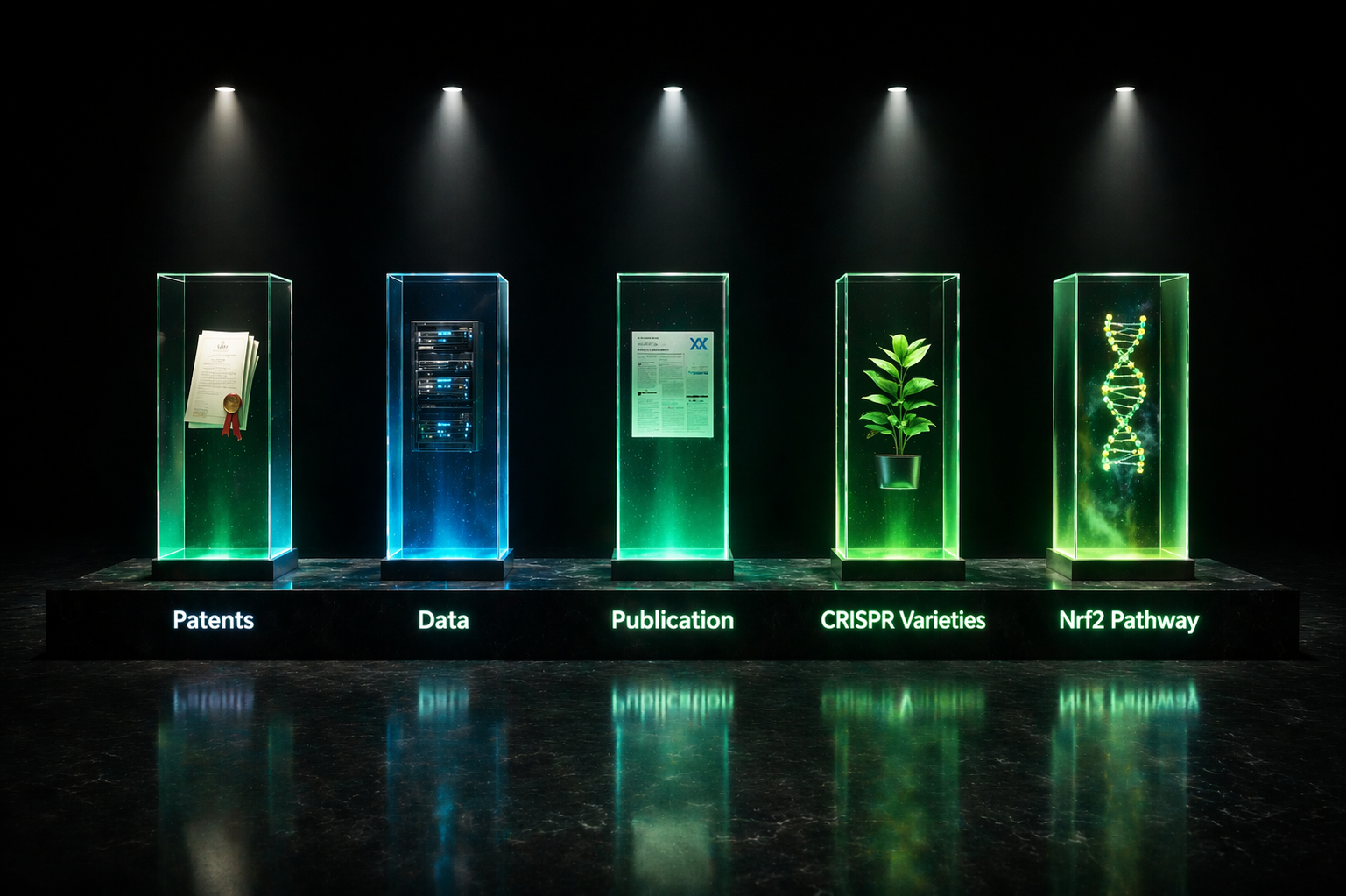
Five Pillars. All Compounding.
At the 41st Space Symposium, no panelist mentioned a single competitor. Gastronaut holds inbound interest from three national space agencies, including JAXA, ISRO, and the Canadian Space Agency. No partnership or agreement with any agency is established.
Patent Applied For
Centrifuge and automation IP, plus CRISPR crop variety IP, in preparation. No patent has been issued or allowed.
1,042 Modeled Growth Cycles
Proprietary data from Gastronaut's G-Space platform. Years to replicate. Cannot be purchased.
Peer-Reviewed
A manuscript describing the ORCA work is in preparation; publication status to be confirmed.
First-Mover Window
Station integration 2026 to 2028. After stations are built, retrofitting is cost-prohibitive.
Nrf2 Pathway Science
Pathway-specific nutrition, rather than generic antioxidant supplementation, is the research focus.